Institute Development Plan (IDP)
Name of Institute: –
Shri M. H. Kadakia Institute of Management and Computer Studies, Ankleshwar (MBA Program)
Smt. Kusumben Kadakia Institute of Computer Application, Ankleshwar (MCA Program)
Address: –
Kadakia Educational campus, Hansot Road Ankleshwar 393001.
Duration: –2025 to 2030
Date of Submission: 15/02/2026
Table of Contents
| Sr. No | Topic | Page No. |
| 1 | Executive Summary | |
| 2 | Institutional Profile | |
| 3 | SWOC Analysis | |
| 4 | Vision, Mission and Core values | |
| 5 | Strategic Goals and Objectives | |
| 6 | Key Focus Areas | |
| 7 | Action Plan / Implementation Strategy | |
| 8 | Monitoring and Evaluation | |
| 9 | Risk Management | |
| 10 | Budget and Financial Plan | |
| 11 | Annexures |
3.Executive Summary
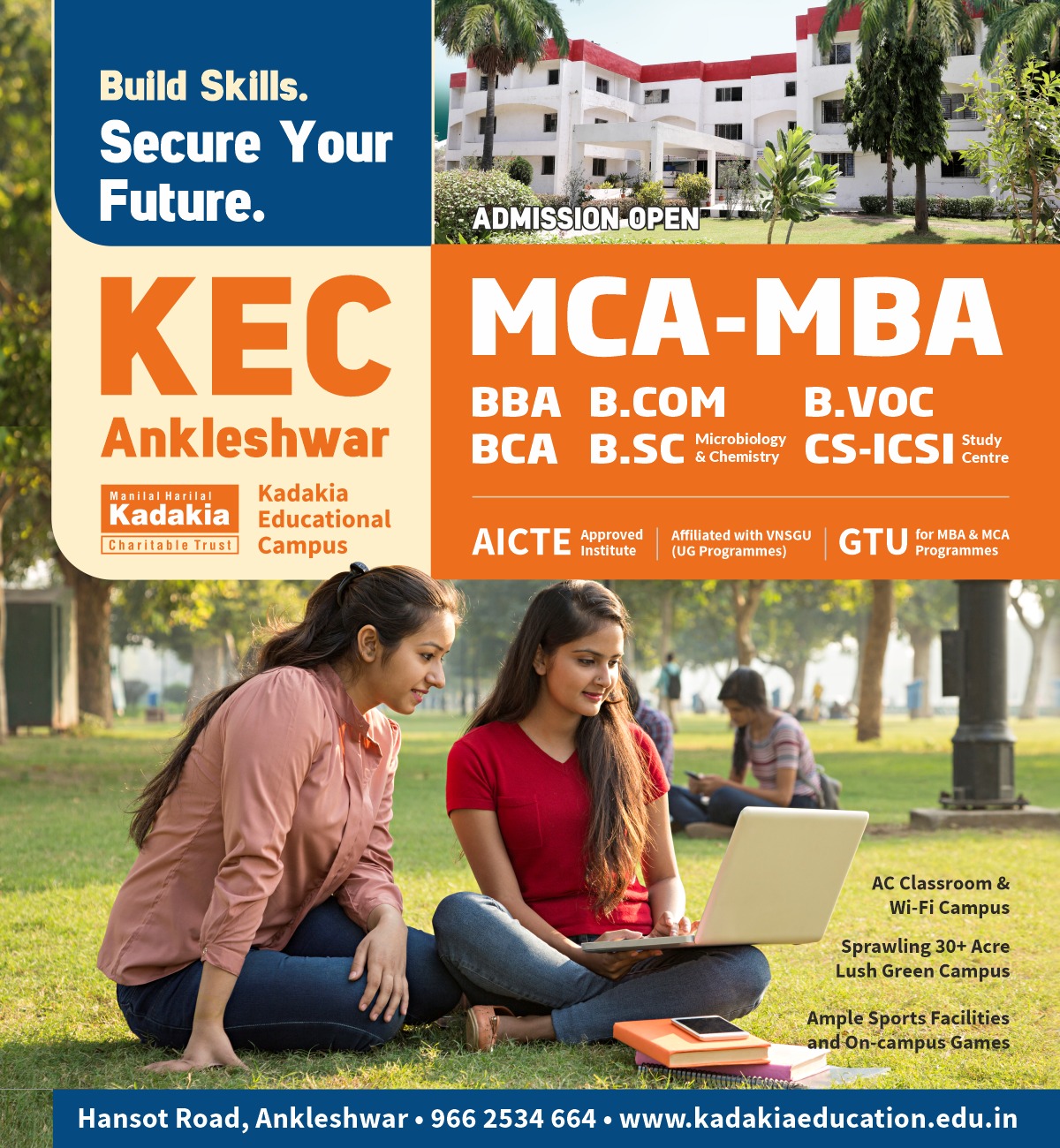
Shri M. H. Kadakia Institute of Management & Computer Studies, Ankleshwar (MBA Program) & Smt. Kusumben Kadakia Institute of Computer Application, Ankleshwar (MCA Program) is a Self-Finance, GTU Affiliated Postgraduate college located in Kadakia Vidya Gram, Hansot Road, Ankleshwar, Bharuch District, Gujarat. It operates under the Shri Manilal Harilal Kadakia Charitable Trust as part of the broader Kadakia Educational Campus (KEC)—a reputable educational hub in southern Gujarat dedicated to providing quality higher education across multiple disciplines.
1.1 Institutional Purpose & Vision
The college aims to empower students through holistic education in Management and computer studies, combining theoretical foundations with practical learning opportunities. This aligns with the vision of the Kadakia Educational Campus to prepare students for professional success, societal contribution, and lifelong learning.
1.2 Academic Programs
The institution offers undergraduate degree programs designed to meet contemporary Academic and Industry needs. Key programs include:
- Master of Business Administration (MBA) – Management and Organizational Skills
- Master of Computer Applications (MCA) – IT and Software Application Education.
- All programs follow the curriculum and Academic Regulations of Gujarat Technological University (GTU), Ahmedabad ensuring recognized and standardized qualifications.
1.3 Affiliation & Governance
The Institute is Affiliated with Gujarat Technological University (GTU), which governs Academic Standards, Examination systems, and Degree Certification. As an Affiliated Private College, it adheres to regulatory frameworks that support quality higher education provision.
1.4 Campus & Learning Environment
Situated within the Kadakia Education Campus, the college benefits from shared resources and infrastructure that support student development. Facilities typically include:
- Classrooms & practical laboratories for computer studies.
- Library resources for academic research and study.
- Student engagement activities fostering leadership and creativity.
- Support for extracurricular initiatives and personal growth. Target Students
The college serves recent Under Graduates (UG) seeking career-oriented Postgraduate education spanning management and computing. Its programs are designed to prepare students for entry into professional careers, further study, or competitive environments.
1.5 Strategic Highlights
- Positioned as a multidisciplinary Postgraduate Institution within an established education campus.
- Focus on career-relevant programs in commerce, management, Computer and IT.
- Integrated with wider academic offerings of the Kadakia Educational Campus, including postgraduate pathways available elsewhere on campus (MBA/MCA).
1.6 Conclusion
Shri M. H. Kadakia Institute of Management & Computer Studies (MBA Program) & Smt. Kusumben Kadakia Institute of Computer Application, Ankleshwar (MCA Program) is a comprehensive Postgraduate institution that blends academic rigor with practical orientation. Situated within a dynamic educational ecosystem, it equips students with the knowledge and skills needed for success in business, science, and technology-related careers.
4. Institutional Profile
Shri M. H. Kadakia Institute of Management & Computer Studies in Ankleshwar, (MBA) & Smt. Kusumben Kadakia Institute of Computer Application, Ankleshwar (MCA) Gujarat:
4.1 Basic Information
- Name: Shri M. H. Kadakia Institute of Management & Computer Studies, Ankleshwar (MBA) & Smt. Kusumben Kadakia Institute of Computer Application, Ankleshwar (MCA)
- Location: Hansot Road, Kadakia Vidya Gram, Ankleshwar, Bharuch 393001
- Type: Self finance college under Shri Manilal Harilal Kadakia Charitable Trust
- Affiliation Gujarat Technological University (GTU), Ahmedabad
- Established: 2000 as part of the Kadakia Education Campus expansion
4.2 Academic Programs
The college offers Postgraduate Degree programs across several streams, focusing on Management, and computer studies. Common courses include:
- MBA – Master of Business Administration
- MCA – Master of Computer Application
- These programs are designed for students who have completed their Under Graduate Exams, and follow the curriculum and regulations set by Gujarat Technological University.
4.3 Campus & Facilities
- Classrooms & Labs: Well-equipped classrooms and computer labs to support practical learning.
- Library: Available for students with academic and reference resources.
- Extracurricular Activities: Clubs and societies to support cultural, sports, and technical engagement.
4.4 Academic Focus
The college emphasizes a blend of theoretical knowledge and practical application in areas such as:
- Business & Management Studies
- Information Technology & Computer Applications
- The programs are delivered by a team of faculty members experienced in their respective disciplines, offering guidance to help students excel academically and prepare for professional careers.
4.5 Self Development & Placement
The college supports students with career guidance, internships, and placement assistance. Industry linkages and seminars help bridge academic learning with real-world professional skills.
Contact & Admission
- Phone: listed contacts for general and admission queries numbers 9662534664/ 9662534655/9099063371
- Email: kadakiacampus@gmail.com
- Website: www.kadakiaeducation.edu.in
5. SWOC Analysis
Shri M. H. Kadakia Institute of Management & Computer Studies, Ankleshwar (MBA) & Smt. Kusumben Kadakia Institute of Computer Application, Ankleshwar (MCA)
5.1 Strengths
- Multidisciplinary Programs: Offers Postgraduate education in Management and Computer Studies, meeting diverse student interests.
- University Affiliation: Affiliated with Gujarat Technological University (GTU), ensuring standardized curriculum and recognized degrees.
- Supportive Management: Operates under the Shri Manilal Harilal Kadakia Charitable Trust with a strong commitment to education.
- Campus Infrastructure: Part of the Kadakia Education Campus with access to classrooms, laboratories, library, and basic academic facilities.
- Career-Oriented Courses: Programs like MBA and MCA are aligned with industry and employability needs.
- Qualified Faculty: Experienced and dedicated teaching staff focused on student development.
- Student-Centric Approach: Emphasis on academic guidance, discipline, and holistic development.
5.2Weaknesses
- Limited Postgraduate Programs: Focus is mainly on undergraduate courses, restricting advanced academic opportunities within the same college.
- Placement Constraints: Limited on-campus placement opportunities compared to larger or urban institutions.
- Research Exposure: Minimal research activities and publications due to undergraduate-only focus.
- Industry Interaction: Scope for stronger industry tie-ups and internship collaborations.
- Visibility & Branding: Needs greater regional and digital visibility to attract a wider student base.
5.3 Opportunities
- New Programs: Introduction of postgraduate, diploma, or certificate courses in emerging fields.
- Industry Collaboration: Partnerships with local industries in Ankleshwar (industrial hub) for internships and training.
- Skill Development: Expansion of value-added courses, soft skills, IT certifications, and entrepreneurship training.
- Digital Learning: Use of e-learning platforms NPTEL, SWAYAM, MOOCs, and blended teaching methods.
- Research & Innovation: Encouraging faculty and student research, projects, and innovation clubs.
- Government Schemes: Participation in NEP-2020 initiatives, skill-based education, and funding opportunities.
5.4 Challenges
- High Competition: Competition from private universities and colleges offering similar programs.
- Changing Industry Needs: Rapid changes in technology and business demand continuous curriculum updates.
- Student Retention: Attracting and retaining high-performing students in a competitive education environment.
- Resource Constraints: Need for continuous investment in labs, technology, and faculty development.
- Employment Market Fluctuations: Economic changes affecting graduate employability.
6. Vision, Mission and Core values
Vision, Mission, and Core Values for Shri M. H. Kadakia Institute of Management & Computer Studies, Ankleshwar (MBA) & Smt. Kusumben Kadakia Institute of Computer Application, Ankleshwar (MCA).
6.1 Vision
To be a leading institution of higher education that nurtures academic excellence, professional competence, ethical values, and social responsibility, preparing students to meet global challenges in management and computer studies.
6.2 Mission
- To provide quality education through innovative teaching–learning practices in commerce, management, science, and computer studies.
- To promote critical thinking, creativity, and problem-solving skills among students.
- To foster ethical values, discipline, and social commitment in learners.
- To encourage research, skill development, and use of modern technology for holistic development.
- To prepare students for employment, entrepreneurship, and lifelong learning in a competitive global environment.
6.3 Core Values
- Academic Excellence – Commitment to high standards in teaching, learning, and evaluation.
- Integrity and Ethics – Upholding honesty, transparency, and moral values in all academic and administrative activities.
- Inclusiveness and Equality – Providing equal opportunities irrespective of gender, caste, religion, or socio-economic background.
- Innovation and Creativity – Encouraging new ideas, research, and adoption of modern technologies.
- Social Responsibility – Sensitizing students towards community service, environmental sustainability, and national development.
- Student-Centric Approach – Focusing on the overall intellectual, emotional, and professional growth of students.
- Collaboration and Teamwork – Promoting cooperation among students, faculty, industry, and society.
7.Strategic Goals and objectives
Strategic goals and objectives tailored for Shri M. H. Kadakia Institute of Management & Computer Studies, Ankleshwar & Smt. Kusumben Kadakia Institute of Computer Application, Ankleshwar.
7.1Strategic Goal 1: Enhance Academic Excellence
Objectives
- Strengthen curriculum through regular review aligned with industry needs and NEP guidelines
- Introduce interdisciplinary and skill-based courses (data analytics, entrepreneurship, digital finance, etc.)
- Promote innovative teaching practices, including ICT-enabled learning and blended classrooms
- Increase student academic performance and graduation success rates
- Encourage faculty participation in FDPs, research, publications, and conferences
7.2 Strategic Goal 2: Improve Research, Innovation & Knowledge Creation
Objectives
- Establish departmental research clusters and mentorship for young researchers
- Encourage faculty-student research projects and publications in reputed journals
- Develop collaborations with universities, industries, and research bodies
- Promote seminars, workshops, patents, and minor/major research grants
- Create an innovation and entrepreneurship development cell (IEDC/Startup Cell)
7.3 Strategic Goal 3: Strengthen Industry & Community Engagement
Objectives
- Build strong partnerships with industries in Ankleshwar–Bharuch region
- Expand internship, apprenticeship, and campus recruitment programs
- Conduct corporate lectures, expert talks, and industrial visits
- Offer consultancy, training, and extension services to local enterprises
- Promote community outreach, NSS/NCC, and social impact initiatives
7.4 Strategic Goal 4: Enhance Student Development & Employability
Objectives
- Establish a structured Career Guidance, Training, and Placement Cell
- Provide soft-skills, communication, and professional competency training
- Promote entrepreneurship, startup competitions, and student clubs
- Strengthen mentoring, counselling, and student support mechanisms
- Encourage sports, cultural activities, and holistic personality development
7.5 Strategic Goal 5: Digital Transformation & Infrastructure Development
Objectives
- Upgrade laboratories, computer centers, library resources, and smart classrooms
- Promote digital learning platforms, LMS, and e-content development
- Strengthen IT infrastructure, cybersecurity, and campus automation
- Ensure safe, accessible, and eco-friendly campus facilities
- Expand physical infrastructure to support academic growth
7.6 Strategic Goal 6: Ensure Good Governance & Institutional Sustainability
Objectives
- Strengthen transparent, participative, and data-driven governance systems
- Align processes with NAAC/NBA/NIRF quality benchmarks
- Improve financial sustainability through resource mobilization and grants
- Enhance alumni engagement and institutional branding
- Develop a culture of accountability, ethics, and continuous improvement
7.7 Strategic Goal 7: Promote Inclusivity, Values & Environmental Responsibility
Objectives
- Ensure equal opportunities and inclusive learning environment
- Promote gender sensitization, social equity, and student well-being
- Integrate values, ethics, and civic responsibility in campus activities
- Implement green initiatives — waste management, energy conservation, plantation
- Progress toward a clean, green, and sustainable campus
8.Key Focus Areas
Shri M. H. Kadakia Institute of Management & Computer Studies Ankleshwar & Smt. Kusumben Kadakia Institute of Computer Application, Ankleshwar align with higher-education quality benchmarks, employability needs, and institutional growth priorities.
Key Focus Areas
- Academic Excellence & Curriculum Development
- Outcome-based learning, skill-based and industry-aligned curriculum, interdisciplinary education.
- Student Development & Employability
- Career readiness, soft skills training, internships, placements, entrepreneurship support.
- Research, Innovation & Knowledge Creation
- Faculty–student research, publications, innovation cell, patents, research funding.
- Industry Collaboration & Community Engagement
- MoUs with industries, industrial visits, consultancy, extension and outreach activities.
- Digital Transformation & ICT-Enabled Learning
- Smart classrooms, LMS adoption, e-content, digital literacy and automation.
- Infrastructure & Learning Resources Enhancement
- Modern labs, upgraded library, safe and eco-friendly campus facilities.
- Quality Assurance & Institutional Governance
- NAAC/NIRF alignment, data-driven decision-making, transparency and accountability.
- Inclusive Education, Values & Holistic Development
- Equity, gender sensitization, ethics, cultural and sports engagement, student well-being.
- Environmental Sustainability & Green Campus Initiatives
- Waste management, energy conservation, plantation and environmental awareness.
- Alumni, Stakeholder & Institutional Branding
- Alumni networking, community partnerships, reputation and outreach strengthening.
9.Action Plan /Implementation Strategy
Shri M. H. Kadakia Institute of Management & Computer Studies, Ankleshwar & Smt. Kusumben Kadakia Institute of Computer Application, Ankleshwar. The actions are grouped under key focus areas with timelines and responsibility indicators.
ACTION PLAN
9.1 Academic Excellence & Curriculum Development
Actions
- Introduce outcome-based and skill-oriented curriculum across departments
- Organize curriculum review workshops with industry experts (annual)
- Implement blended learning, ICT-enabled teaching, and e-content creation
- Conduct faculty development programs (FDPs) twice a year
Timeline: Short to Medium Term (0–2 years)
Responsibility: IQAC, Heads of Departments, Academic Council
9.2 Student Development & Employability
Actions
- Establish structured Career Guidance & Placement Cell activities
- Provide soft-skills, communication, aptitude, and interview training
- Facilitate internships, industrial visits, and apprenticeship programs
- Conduct entrepreneurship bootcamps and startup mentoring
Timeline: Ongoing (every semester)
Responsibility: Placement Cell, Training Cell, Entrepreneurship Cell
9.3 Research, Innovation & Extension
Actions
- Create departmental research groups and faculty–student research projects
- Encourage publications, minor/major research proposals, and patent filing
- Organize national seminars, conferences, and workshops annually
- Strengthen NSS/NCC and community outreach projects
Timeline: Medium Term (1–3 years)
Responsibility: Research Committee, IEDC/Innovation Cell, NSS/NCC Units
9.4 Industry Collaboration & Partnerships
Actions
- Sign MoUs with industries in the Ankleshwar–Bharuch industrial belt
- Arrange expert lectures and industry-led certificate courses
- Develop consultancy services and collaborative projects
- Establish Industry Advisory Board for program feedback
Timeline: Short to Medium Term (0–2 years)
Responsibility: Industry Connect Cell, HoDs, Management Representatives
9.5 Digital Transformation & Infrastructure
Actions
- Upgrade computer labs, smart classrooms, and high-speed connectivity
- Implement Learning Management System (LMS) for course delivery
- Digitize library resources and enhance e-database access
- Improve campus safety, accessibility, and eco-friendly facilities
Timeline: Medium to Long Term (1–4 years)
Responsibility: ICT Committee, Infrastructure Committee, Administration
9.6 Quality Assurance, Governance & Accreditation
Actions
- Strengthen documentation and data-driven decision-making via IQAC
- Align processes with NAAC/NIRF/NEP quality benchmarks
- Conduct periodic academic and administrative audits
- Promote transparency, participative governance, and feedback systems
Timeline: Ongoing
Responsibility: IQAC, Management, Administrative Office
9.7 Inclusivity, Values & Holistic Development
Actions
- Strengthen mentoring, counselling, and grievance-redressal mechanisms
- Promote gender sensitization, equity, and student wellness programs
- Encourage sports, cultural, and value-education activities
- Implement anti-ragging and student support frameworks
Timeline: Ongoing
Responsibility: Student Support Committee, Discipline & Counselling Cells
9.8 Environmental Sustainability & Green Campus
Actions
- Implement waste management, plastic-free, and energy-saving initiatives
- Promote tree plantation and green landscaping drives
- Conduct environmental awareness programs and audits
- Move towards a clean and sustainable campus model
Timeline: Short to Long Term (0–3 years)
Responsibility: Green Campus Committee, NSS, Estate/Facility Team
10. Monitoring and Evaluation
Monitoring & Evaluation (M&E) framework for Shri M. H. Kadakia Institute of Management & Computer Studies, Ankleshwar & Smt. Kusumben Kadakia Institute of Computer Application, Ankleshwar. It is structured to align with NAAC / IQAC and institutional quality systems.
Monitoring & Evaluation Framework
10.1 Purpose of Monitoring & Evaluation
- To track the implementation of strategic goals, action plans, and academic initiatives
- To assess institutional performance using measurable indicators (KPIs)
- To support evidence-based decision-making and continuous quality improvement
- To ensure alignment with NEP, NAAC, NIRF, and university guidelines
10.2 Monitoring Mechanism
A. Institutional Level
- IQAC conducts quarterly review meetings to track progress of activities
- Annual Academic Planning and Review through Academic Calendar compliance
- Departmental reports submitted to IQAC and Principal
B. Department Level
- Monthly monitoring of teaching–learning, student performance, activities
- Review of curriculum delivery, lesson plans, and assessment outcomes
- Mentor–mentee review and student support tracking
C. Committee / Cell Level
- Each committee (Placement, Research, NSS, ICT, Green Campus, etc.)
submits periodic progress reports with achievements and evidence
10.3 Key Performance Indicators (KPIs)
Academic & Teaching–Learning
- Course completion status and learning outcomes achievement
- Student performance, pass percentage, progression and retention
- Classroom innovation, ICT-enabled teaching, blended learning usage
Student Development & Employability
- Number of internships, training programs, and placements
- Participation in skill development, entrepreneurship, and career programs
Research & Innovation
- Publications, research projects, patents, seminars, FDPs, MoUs
Infrastructure & Digital Initiatives
- Laboratory/library upgrades, ICT adoption, LMS usage indicators
Governance & Quality Assurance
- NAAC/NIRF compliance status, audit findings, feedback implementation
Community & Extension
- NSS/NCC activities, outreach programs, social impact initiatives
Inclusivity & Campus Well-Being
- Counselling support, grievance resolution, safety and support measures
10.4 Evaluation Process
- Mid-Year Review – assessment of progress against targets
- Annual Outcome Evaluation – comparison of planned vs achieved objectives
- Stakeholder Feedback – students, faculty, alumni, employers, parents
- Internal & External Academic Audits – teaching, administrative, financial
- Corrective & Preventive Actions (CAPA) implemented through IQAC
10.5 Documentation & Evidence System
- Departmental activity registers and digital records
- Meeting minutes, reports, attendance and photographic evidence
- Data templates for NAAC / AQAR / NIRF documentation
- Centralized evidence repository maintained by IQAC
10.6 Continuous Improvement & Reporting
- Action points recorded after every review meeting
- Gaps identified and improvement strategies implemented
- Annual Institutional Performance Report prepared and shared with management
- Progress communicated to stakeholders for transparency and accountability
11.Risk Management
Management Framework for Shri M. H. Kadakia Institute of Management & Computer Studies, Ankleshwar. It is written in an academic–administrative style suitable for inclusion in strategic or NAAC documentation.
Risk Management Framework
11.1Purpose of Risk Management
The objective of the Risk Management framework is to identify, assess, and mitigate potential risks that may affect the academic, administrative, financial, and operational functioning of the institution. The framework supports proactive planning, institutional resilience, continuity of operations, and sustainable development.
11.2 Risk Governance Structure
- Principal & Management – overall oversight and policy direction
- IQAC – coordination, monitoring, and review of risk mitigation measures
- Risk Management Committee – identification and prioritization of risks
- HoDs / Committees / Cells – implementation at departmental level
- Administrative Office – compliance, documentation, and reporting
Periodic review meetings are conducted to evaluate emerging risks and corrective actions.
11.3 Major Categories of Institutional Risks
A. Academic & Teaching–Learning Risks
- Curriculum gaps, low learning outcomes, examination disruptions
- Faculty availability, skill gaps, or high attrition
- Limited adoption of ICT and blended learning practices
B. Student-Related Risks
- Dropout rates, low progression or placement outcomes
- Student stress, grievance, safety, or disciplinary concerns
C. Financial & Resource Risks
- Inadequate funding, budget constraints, or revenue instability
- Delays in grants, procurement, or infrastructure development
D. Administrative & Governance Risks
- Non-compliance with regulatory guidelines (NAAC, NIRF, University, NEP)
- Inefficient processes, weak documentation, or data management gaps
E. Technology & Data Security Risks
- System failures, cyber security threats, or loss of academic records
F. Infrastructure & Safety Risks
- Laboratory, electrical, fire, or campus safety hazards
- Natural disasters or emergency situations
G. Reputational & Stakeholder Risks
- Grievances, complaints, social media reputational impact
- Weak alumni, industry, or community perception
11.4 Risk Mitigation Measures
- Curriculum review, academic audits, and faculty development programs
- Strengthening mentoring, counselling, grievance-redressal and support systems
- Diversified resource mobilization and financial planning
- Strict adherence to regulatory and accreditation guidelines
- Robust documentation, MIS and digital record-keeping
- Cybersecurity protocols, data backup, and access controls
- Campus safety audits, fire & first-aid systems, emergency preparedness
- Communication, stakeholder engagement, and outreach initiatives
11.5 Monitoring, Review & Reporting
- Risks reviewed quarterly by IQAC and Risk Committee
- Annual Risk Register and Mitigation Report prepared
- Evidence maintained through reports, minutes, and action-taken records
- Corrective and Preventive Actions (CAPA) implemented and monitored
- Continuous improvement through feedback and performance indicators
11.6 Business Continuity & Emergency Preparedness
- Disaster and crisis-response plan for academic continuity
- Backup systems for digital learning and administrative functions
- Safety drills, awareness programs, and role-based responsibilities
11.7 Culture of Responsibility & Prevention
The institution promotes a culture of accountability, transparency, ethics, and risk awareness among faculty, staff, and students to ensure institutional stability and long-term sustainability.
12.Budget and Financial plan
Here is a clear, academic-administrative style Budget and Financial Plan for Shri M. H. Kadakia Institute of Management & Computer Studies, Ankleshwar. It is suitable for inclusion in a strategic plan, AQAR/NAAC report, or institutional policy document.
Budget and Financial Plan
12.1 Purpose of the Financial Plan
The Budget and Financial Plan aims to ensure efficient utilization of institutional resources, financial sustainability, and support for academic growth, infrastructure development, student services, research, and quality enhancement initiatives.
12.2 Budget Planning Process
- The Principal and Management provide overall financial guidance.
- Each Department and Committee submits annual budget proposals.
- The Finance Committee consolidates and prioritizes requirements.
- The annual budget is prepared based on institutional goals, enrolment trends, and projected income–expenditure.
- Periodic financial reviews are conducted to ensure accountability and optimal resource utilization.
12.3 Major Sources of Income
- Tuition and student fee collections
- Management / Trust support and institutional contributions
- Government / University grants and scholarships
- Research grants, projects, and consultancy income
- Donations, endowments, alumni contributions
- Certificate courses, training programs, workshops and extension activities
12.4 Key Areas of Expenditure
A. Academic & Teaching–Learning
- Faculty and staff salaries, FDPs, seminars, and academic activities
- Learning resources, teaching aids, and laboratory consumables
B. Infrastructure & Facilities
- Maintenance of buildings, classrooms, laboratories, ICT facilities
- Upgradation of library, equipment, furniture, and utilities
C. Digitalisation & ICT
- Smart classrooms, LMS, software licenses, campus automation systems
- IT maintenance, cybersecurity and data storage systems
D. Student Support & Development
- Scholarships, mentoring, counselling, co-curricular and sports activities
- Placement training, internships, entrepreneurship and skill programs
E. Research, Innovation & Extension
- Research projects, publications, conferences, patents
- Community outreach, NSS/NCC and social engagement initiatives
F. Quality Assurance & Governance
- NAAC/NIRF/AQAR documentation, audits, accreditation activities
- Professional services, training, and capacity-building initiatives
G. Contingency & Risk Preparedness
- Emergency funds, safety infrastructure, and disaster response provisions
12.5 Financial Control & Accountability
- Transparent accounting procedures and audited financial statements
- Periodic internal and statutory audits
- Budget variance analysis and corrective measures
- Compliance with government, university and regulatory norms
- Digital record-keeping and financial documentation system
12.6 Resource Mobilization & Sustainability Strategy
- Expansion of value-added courses and industry-linked programs
- Strengthening alumni and donor engagement initiatives
- Applying for government, CSR, and research funding schemes
- Encouraging consultancy, training and collaborative projects
- Promoting cost-effective and eco-friendly operational practices
12.7 Monitoring & Review
- Quarterly financial review by Finance Committee & IQAC
- Annual Financial Performance Report submitted to Management
- Data-driven decisions for future budget planning
- Continuous improvement approach to financial governance
13.Annexure – All the above information’s are clearly mentioned no annexures are required.